.
Note: This was originally written for Fantasy Magazine many months ago, but then they changed all their plans for writing about comics and so they no longer need it. So I'm throwing it up here and on Thutopia instead. We'll call this apropos rather than horribly too late because the comics under discussion were just collected in hardcover and released on the first of this month.
.
Was the best innovation of 2009 a throwback to our lost past?
-or-
Why DC's Wednesday Comics were so darn great
I recall reading the daily comics as Bill Watterson's Calvin lamented the state of the modern comic strip. Watterson himself used all his power to fight for a full half page on Sundays at the end of his run and those strips still seem revolutionary. But really, he was just hearkening back to the era of Grand Art in the newspapers' funny pages.
Our modern Sunday sheet doesn't have any great panoramic views such as Nemo in Slumberland nor do we have much left in the way of grand adventure ala Hal Foster or Chester Gould. Most papers are crammed full of joke stgrips. And, sure, Pearls Before Swine is brilliant, but a hilarious eight-panel (crammed into so small a space only the simplest line drawings read) is only one sliver of Sundaycomics' heritage. But we haven't room anymore for the grand or the beautiful.
Enter Wednesday Comics.
For twelve weeks in mid 2009, DC released not-full-sized-but-still-good-
While one advantage of newspaper comics is their endless nature, my own nature as a reader prefers beginnings and endings. But if a few of Wednesday Comics' stories had ended at nine weeks and others at fifteen and as one dropped out another took its place and WC had become an institution --- how cool would that have been?
But they didn't and so it goes. Here's to hoping that, at the very least, WC was successful enough to justify a second twelve-week run next year. Because the grand scope of a single story splayed over one large piece of paper is a thing of beauty and something worth experiencing again, for the first time.
Now for brief reviews of all the stories.

Batman - story by Brian Azzarello with art by Eduardo Risso
No fantasy here. This is a straight Batman story, with the knight of the night in pure detective mode. It's a fine story, but reading on, one is left to wonder, with all the DC characters to choose from, why would anyone pick Batman? (Or Superman for that matter.) With DC's universe of underdeveloped and deliriously fun tertiary characters to choose from, why pick a character everyone knows, and tell a workaday story about him? It doesn't make much sense. Even if it is a good story.
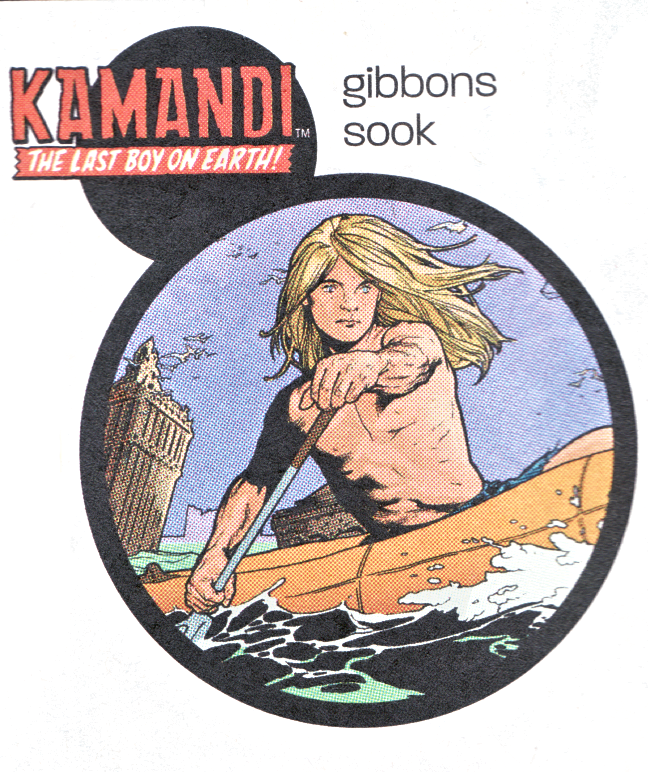
Kamandi - story by Dave Gibbons with art by Ryan Sook
From my own reading, I am only really familiar with Jack Kirby's work from the end of his life --- when he was merely a shell of the Jack Kirby who created the modern superhero.
Kamandi however is a character of Kirby's from the early '70s, and the energy and strength of Sook's art and the wild adventure of Gibbons's story helps me understand what the big deal with Kirby has always been about. This is the best Kirby story I've ever read, even if Kirby did not directly touch it.
Kamandi lives in a distant future where humans are all but destroyed (he is, after all, "The Last Boy on Earth") and sentient anthropomorphic animals battle across the demolished American landscape. The villains here (as in two more WC stories to come) are a band of apes who intend to rule the entire landscape. They have kidnapped the king of the tigers, a friend of Kamandi's, and are planning to execute him. Naturally, the heroic human rides to the rescue, uniting tigers and dogs and lions on his way.
While in many respects a straightforward postapocalyptic adventure, Kamandi uses quiet moments between the violence and explosions to explore concepts like loneliness and loyalty and family and morality. A couple surprising turns and genuine rapport between the characters makes this tale a real winner. I wouldn't be surprised to see Kamandi resurrected again as this story inspires other artists.
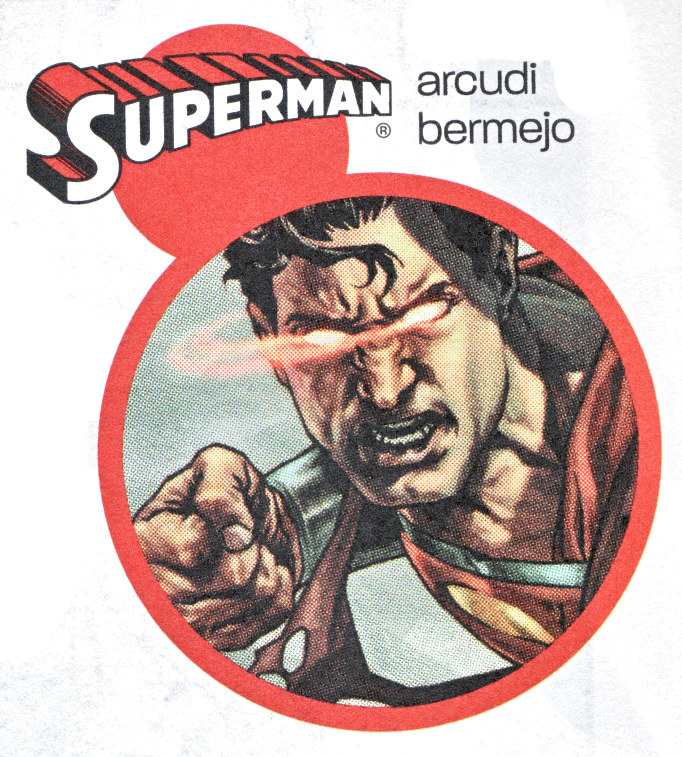
For a moment, Superman almost becomes exactly who Lex Luthor has always said he is: an alien with no real ties to Earth.
During an attack from other, more monstrous aliens, a comment from one fills him with insecurity regarding his status as an adopted Earthling, So Supes heads home to Ma and Pa Kent in hope of regaining his bearing.
Though merely a simple and classic Superman tale (told in an overwrought visual style not well matched to newsprint), this story does reveal what Wednesday Comics' form can do best: Art done large.
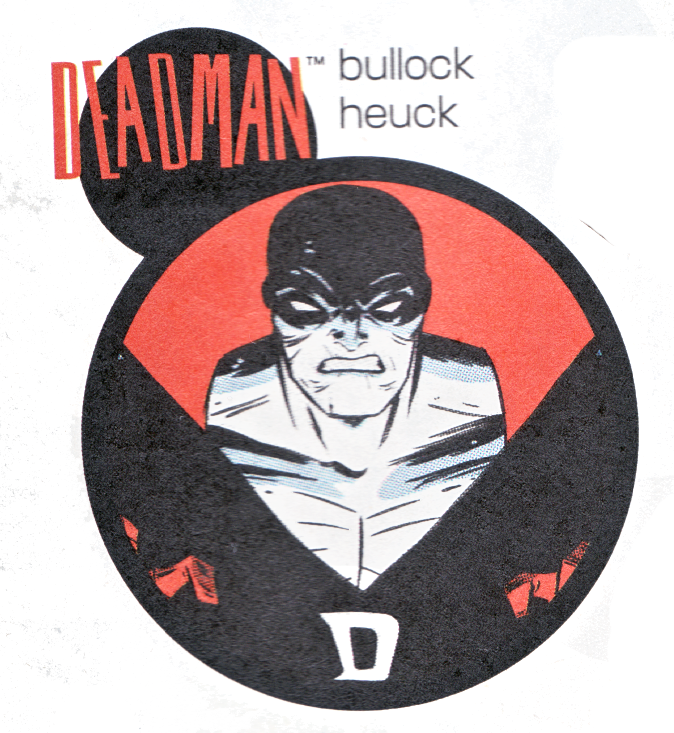
Deadman's afterlife heroics done large. Even suddenly alive again, Deadman looks like a corpse (which is fine, I suppose, since, much as you know a dead Superman will someday return to life, a living Deadman will necessarily return to death), but alive or dead, he abandons himself to doing the right thing, no matter what it may be. And entangeld in a web of demon-evil hijinks, he is level-headed enough to see that even attractive evils are evil.
The ugly demons --- the ones that distract the reader from the pretty ones --- are truly hideous. And the monstrous hell Bullock creates is one of the greatest creations in all of WednesdayComics. And, curious among this set of deliberately ended comics, Deadman leaves us with something of a cliffhanger.
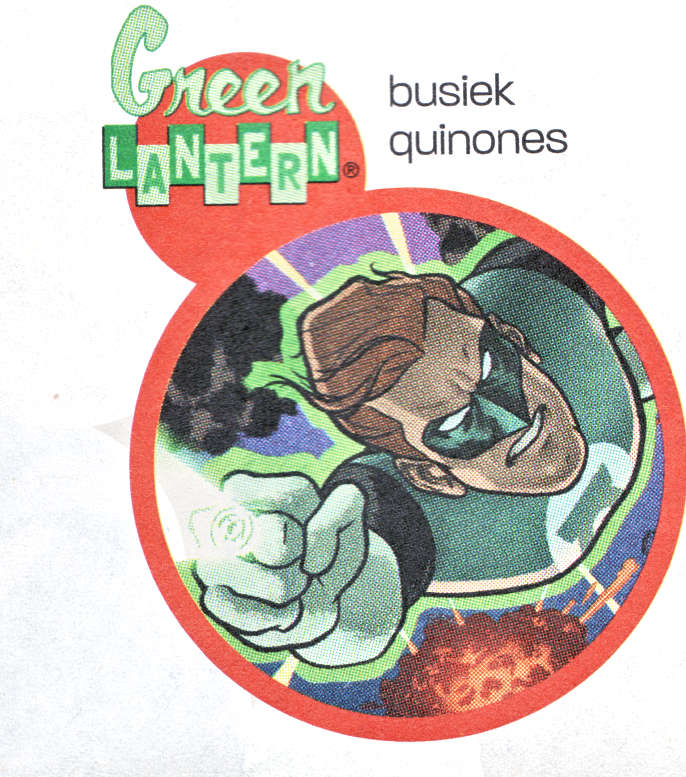
Green Lantern - story by Kurt Busiek with art by Joe Quiñones
A mashup of Cartoon Network and Mad Men, the thrust is not on the alien invasion, but on the bromance between Green Lantern Hal Jordan and an old astronaut friend. The story is highly professional and manipulative, but it's too effective (and thus charming and lovable and even moving) to really hold its machinations against it. It makes you smile? It makes you tear up? Well, even if it was manipulative, we all want that experience from time to time.
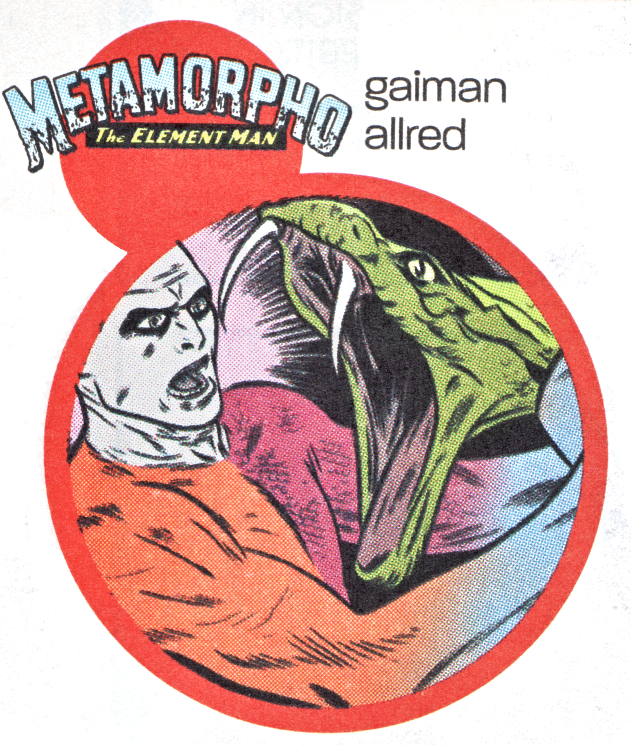
Metamorpho - story by Neil Gaiman with art by Michael Allred
Gaiman has long claimed that he writes his scripts to match the strengths of the artist he is working with, but never has that been more clear than here. Mike Allred's pop sensibilities rule every square millimeter of all twelve pages, with his wife Laura Allred's colors blinding us with that rapid cheerfulness the Allreds are masters of. It's not till near the end of the run, when Metamorpho works his way through the Periodic Table of the Elements (looking like a board game --- another Allredian conceit for sure), that the brilliant wordplay finally reveals that Gaiman had a hand in this at all. His genius for goofing off finally shines though Allred's genius for goofing off, and this pastiche of '60s silliness hits its highest point. What this world needs more of, it is clear, are more more more Gaiman/Allred collaborations.

Teen Titans - story by Eddie Berganza with art by Sean Galloway
One of the weaker stories and one of the harder to access without a decent background in DCology. It's a typical comic-book monstrosity with switchbacks and hidden identities and amnesia and time travel and sudden reveals and, yawn, so on. And, like Superman before it, a little too gray and brown for newsprint.

Adam Strange is one of the strangest characters DC has produced, and Paul Pope, coming off a string of successes in the strange, is well suited to tackle Adam as he cavorts with his metalbikini-clad love against an army of bad-tempered blue monkeys. Curiously, the story is not weakened --- or even destrangified --- by the sudden return of Adam to Earth where he is --- gasp! --- old and boring.
Pope's wiggly lines bring Strange's world to life in a way a more traditional, cleaner line never could have. He moves Strange from the realm of the strange curiosity, to the realm of the strangely real.

Supergirl - story by Jimmy Palmiotti with art by Amanda Conner
This is the silly one. Others may have aimed for silly, but this one is silly. But, even though the original 1959 Supergirl was silly, she was treated by her creators with contempt. It's clear Palmiotti and Conner love their Supergirl, even if she is stuck chasing a silly superdog and a silly supercat as they engage in silly misadventures.
But though this silly Supergirl is lovingly presented, she's not apt to make feminists proud. She asks for help solving her problem from a young man, then her problem is explained to her by an old man, and her problem is finally solved by a dog and a cat.
In the end, although Supergirl saves a plane filled with people, she never really acts --- she is only acted upon. And that makes her a dull hero.
Also, she is very silly.

Metal Men - story by Dan DiDio with art by José Luis García-López and Kevin Nowlan
The Metal Men are and have always been goofy. And DiDio plays that goofiness to the hilt with punny titles and campy dialogue, and the artists do their part to make the characters and their world as haha as possible. And that devotion to humor pays off when a genuine menace threatens to destroy them all. Having laughed with the Metal Men, we can't bear to see them die! A simple story well played.
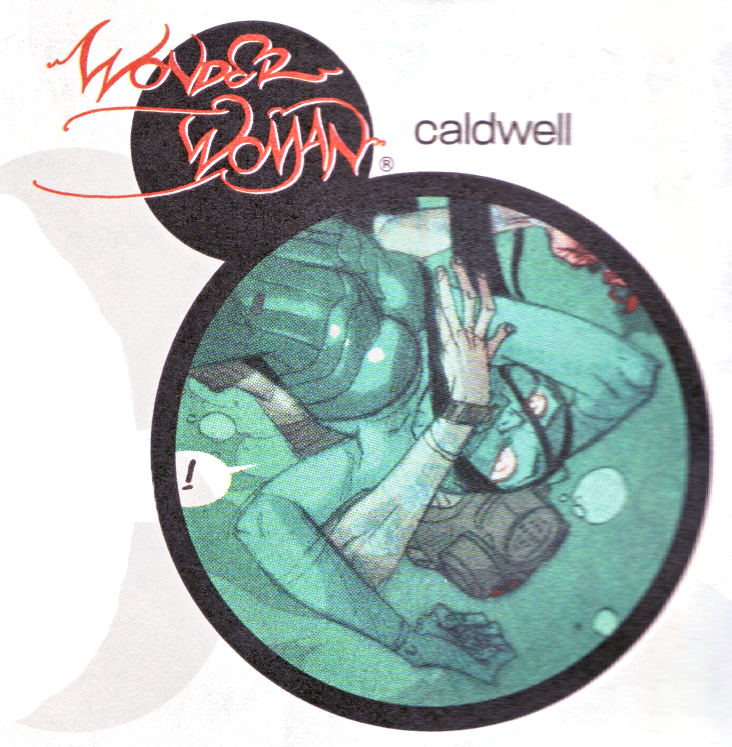
Wonder Woman - story and art by Ben Caldwell
While Wonder Woman seems as prone to the ordinary as Batman and Superman, Caldwell instead brings us an origin story of a young Diana, navigating her physical dreams of our world, that is structured like a classic folk tale. He lays it out in a more complicated and daring style, then draws it in a style so European I kept checking to see if maybe, I don't know, Nicolas de Crécy was doing the art.
The melding colors and complex painterly style don't always read well on newsprint (definitely don't try reading this in bed with only a small bedside lamp as your companion), but the artistic ambition of this Wonder Woman is to be lauded.

Sgt. Rock - story by Adam Kubert with art by Joe Kubert
Another story without any fantastic elements, the classic Nazi fighter gets roughed up but holds his ground. This looks and tastes much like the original, which seems compliment enough.
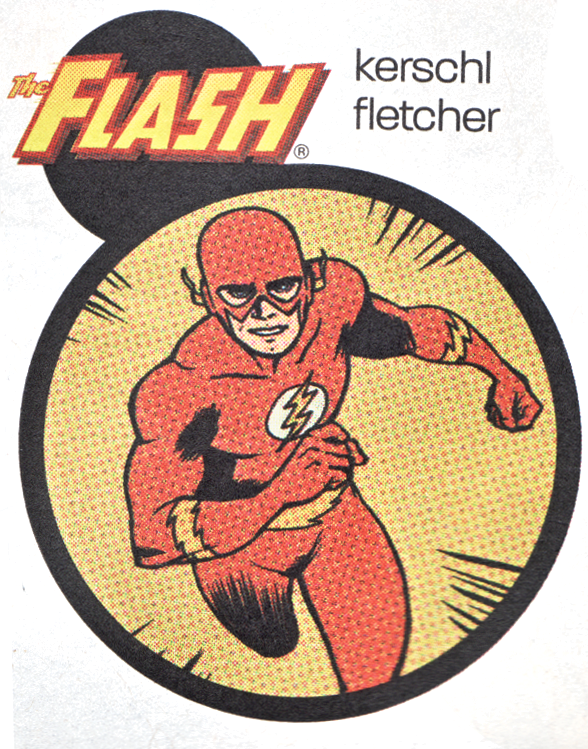
The Flash - story by Karl Kerschl and Brenden Fletcher with art by Karl Kerschl.
The first few weeks, this page was split in half, between a Flash story and an Iris story. Two views of the same relationship, one from his perspective, one from hers. His told in a classic superhero look, hers approximating classic mid-century newspaper stories of strong women.
The Iris half of the tale was abandoned however. My suspicion is that the writers found it too difficult to maintain her half of the story while Flash is multiplying himself and fighting gorillas. He's just way cooler, right?
But I think that decision was a tragedy. The counterpoint of a normal human's p-o-v offered a sense of reality to an otherwise far over-the-top story. Too bad they stopped thinking the human experience merited half their time.

The Demon and Catwoman - story by Walter Simonson with art by Brian Stelfreeze
Unfortunately disjointed, this ambitious-seeming but ultimately overly simple story may be the best proof that Wednesday Comics should have been made ongoing. Simonson simply bit off too much with this story and wrapping it up in twelve weeks resulted in something much less that what might have been. The iambic pentameter-spewing demon fighting his centuries-dead nemesis while Catwoman struggles not to be a pawn --- the story had potential. Would it had been given the weeks necessary to fully unfold. Twenty weeks maybe. By then it would have been surrounded by all new stories, and, upon ending, replaced itself by some new and marvelous and perhaps even forgotten character.
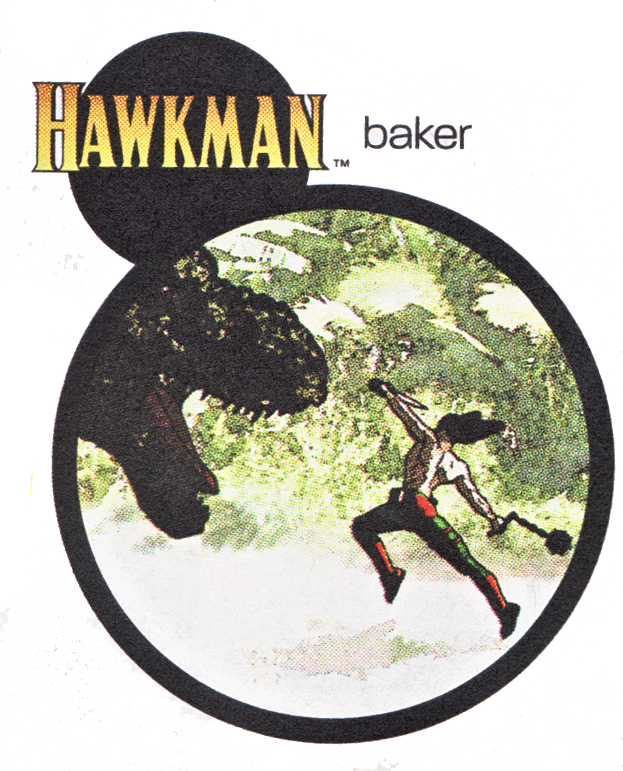
Hawkman - story and art by Kyle Baker
The sepia-toned heightened reality of Baker's Hawkman is the perfect final page. Pure superhero and purely ridiculous. Let's start with aliens! Then let's have dinosaurs! And then sea monsters! But, amazingly, it all pulls together. Village Voice got it right when, choosing this story as one of the best comics of 2009, they wrote "slashing and comically arrogant Hawkman . . . proved it's often secondary heroes who are ripest for artistic extravagance."
Exactly.
Bring us another twelve weeks next year, DC.
Or, even better, bring us fifty-two.